Agents handle sensitive client and transaction data every day. These ten habits form the foundation of a secure, defensible practice.
Use strong, unique passwords.
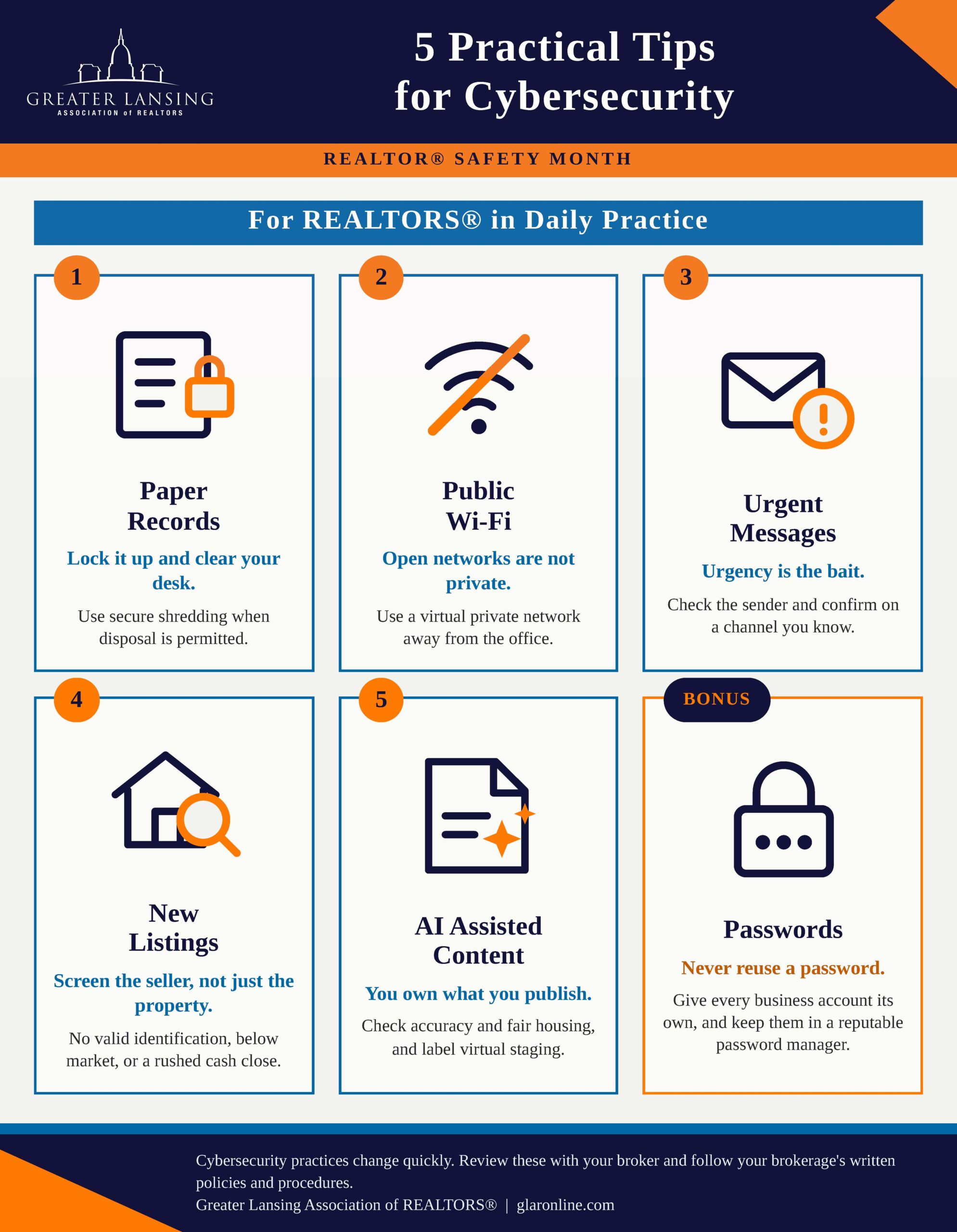
Use a unique, 14+ character password for every account and enable MFA/2FA.
Verify wire instructions by phone.
Never send or accept changed wire instructions by email; verify by calling a known, pre-verified number.
Disclose wire-fraud risk up front.
Give every client a wire-fraud disclosure before they transmit funds or sensitive information.
Treat the unexpected as phishing.
Treat urgent, unexpected links, attachments, voicemail downloads, and login requests as phishing until verified.
Dispose of documents securely.
Keep transaction documents only as long as required, then securely dispose of them.
Wipe devices before disposal.
Lock paper files away and securely wipe or destroy devices and printers before disposal.
Skip public Wi-Fi.
Use a VPN or mobile hotspot instead of open public Wi‑Fi when working remotely.
Vet new listings carefully.
Especially vacant land, vacation homes, cash deals, and fast-close requests—confirm seller ID against ownership records. Best Practices for Vetting Vacant Land Scams
Stick to official app stores.
Download mobile apps only from official app stores, review permissions, and never jailbreak a phone.
Review AI-generated content.
Review AI-generated listing copy, images, and chatbot responses before use, and never enter client-sensitive information into open AI tools.